Derby and District Astronomical Society
Star Trails
[Gallery]
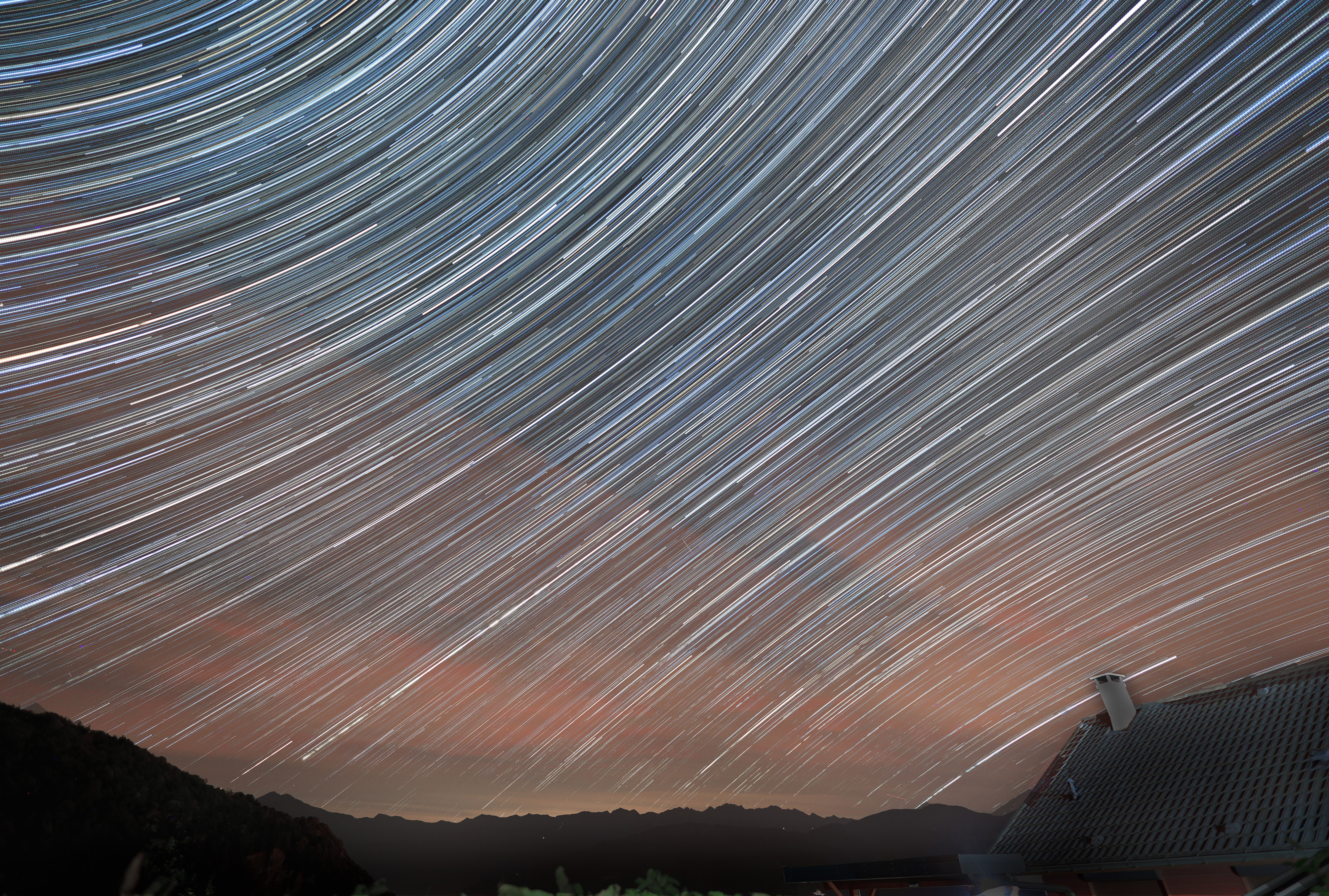
| This image was created by Chris Callaway using 2.75 hours of data gathered on the night of the 12th September 2026 while on vacation near Saint Pierre D'Albigny, France. A Canon R6 II camera mounted on a photographic tripod was used with a 16mm lens. The shutter speed was 30 seconds, aperture f2.8 and ISO 1600. Star Trail CleanR was used to remove aircraft and satellite trails prior to stacking in the same program. Further enhancements were made in Photoshop. Image Credit: Chris Callaway. |
|
|
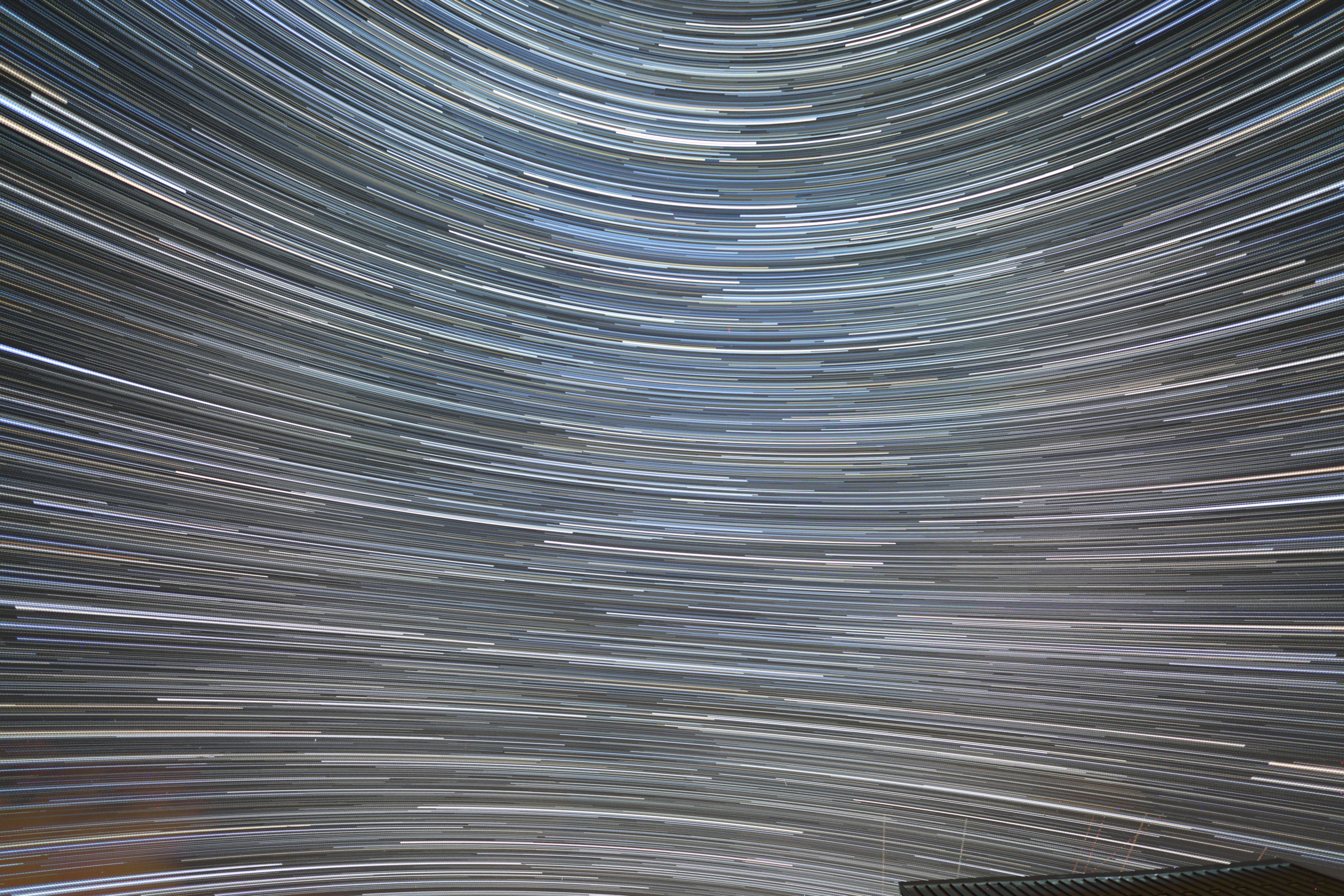
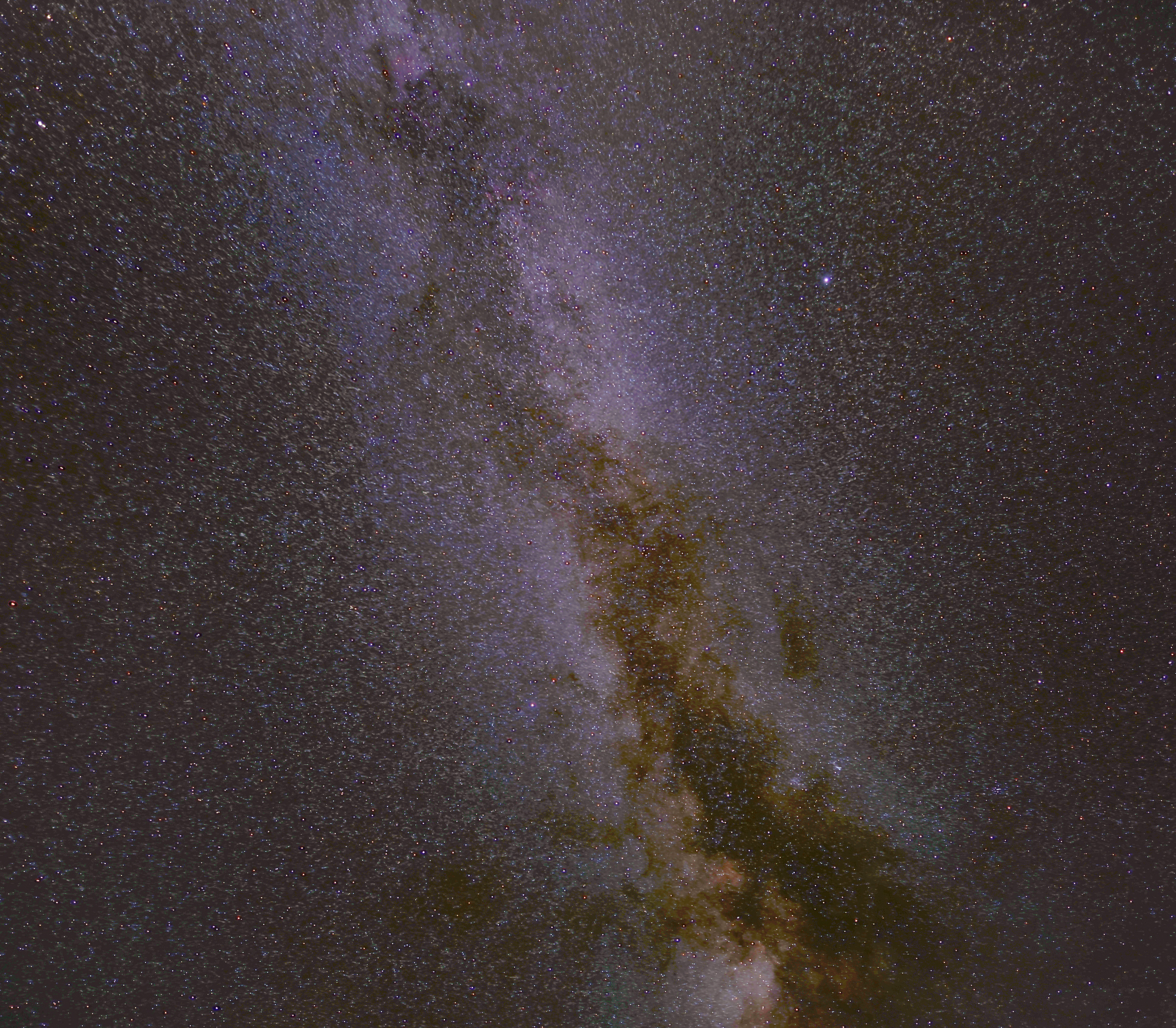
| The following two images were created by Chris Callaway using exactly the same data. A total of 2.4 hours of data were captured on the 10th September 2026 while on vacation near Saint Pierre D'Albigny, France. A Canon R6 II camera mounted on a photographic tripod was used with a 16mm lens. The shutter speed was 30 seconds, aperture f2.8 and ISO 1600. The star trail image was created with the individual subs being cleaned of aircraft and satellite tracks using Star Trail CleanR prior to compiling in the same program. Further enhancements were made in Photoshop. The Milky Way image is a crop of the central part of the star trail image above it. Pixinsight was used to stack the subs for the Milky Way image, Blur Exterminator was then used to reduce star trailing and further enhancements were made in PhotoShop. Image Credit: Chris Callaway. |
 |
|
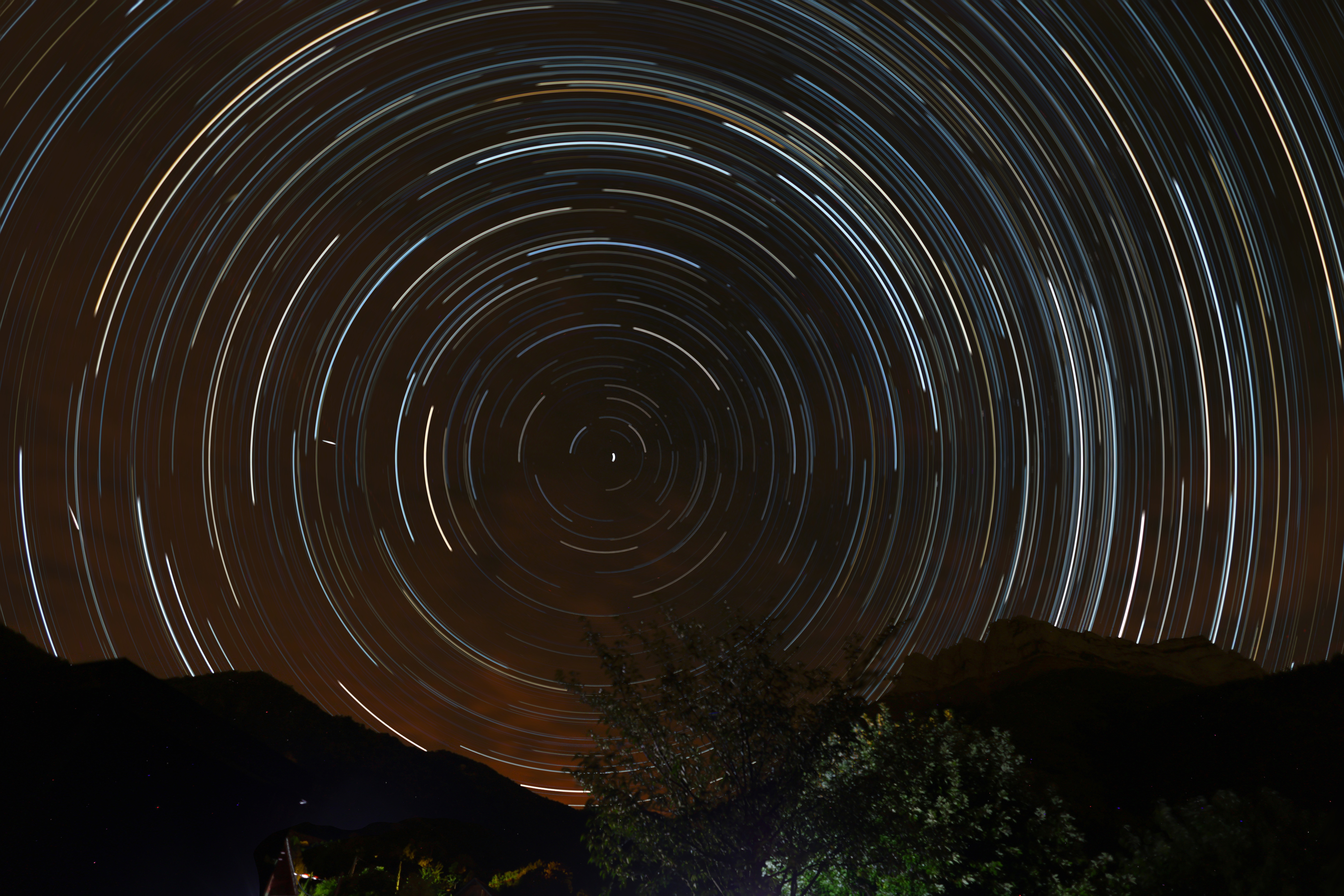
| This image was created by Chris Callaway using 5.5 hours of data gathered on the night of 6th September 2026 while on vacation near Saint Pierre D'Albigny, France. A Canon R6 II camera mounted on a photographic tripod was used with a 16mm lens. The shutter speed was 30 seconds, aperture f3.3 and ISO 400. StarStaX was used for the initial stack with further enhancements made in Photoshop. Image Credit: Chris Callaway. |
|
| This image of star trails was taken at West Yellowstone, Montana on the 18th August 2017 by Pete Hill. Pete used a Canon 450D camera with a Sigma 18-250 mm lens at 18mm, F3.5, and ISO 1600. 20 exposures of 120 seconds each were combined in Starstax 0.7. Image Credit: Pete Hill. |

|
| Peter Hill took this picture of star trails over the dome of the Society's Flamsteed Observatory at our observing session on the 17th May 2014. He used 10 x 10 minute exposures using a Canon 450D camera with a 15 mm fisheye lens at ISO 200 and F3.5, and 10 dark frames. Processing was done using StarStaX and Photoshop Elements 4. The movement of the dome during the evening provides an interesting effect. Image Credit: Pete Hill. |

|
| This star trail photo was taken at Page, Lake Powell in Arizona by DDAS member Chris Newsome while on holiday there in August 2012. It is a combination of about 45 minutes worth of images. Image Credit: Chris Newsome. |

|
| Chris Newsome took this photo of star trails from his observatory in Derby in 2009. The Plough can be seen at lower left and the 'W' of Cassiopeia to the right. Taken with a Canon 400D and a 10mm lens piggybacked on a stationary Celestron C8-NGT. The image comprises 18x60sec exposures at 200ASA. Image Credit: Chris Newsome. |

|
| It is confirmed that there is a black hole in the skies over the Society's Flamsteed Observatory that sucks aeroplanes and satellites into it with a whirling vortex surrounding the event horizon! The following image of star trails was taken on the evening of 26th September 2009 by Chris Newsome. Ursa Major is to the left of the picture, Cassiopea to the right. Technical details:- 27x45sec exposures, Canon 400D, 10mm super-wide angle lens, 400ASA, processed in Startrails v1.1 and CS2. Image Credit: Chris Newsome. |

|
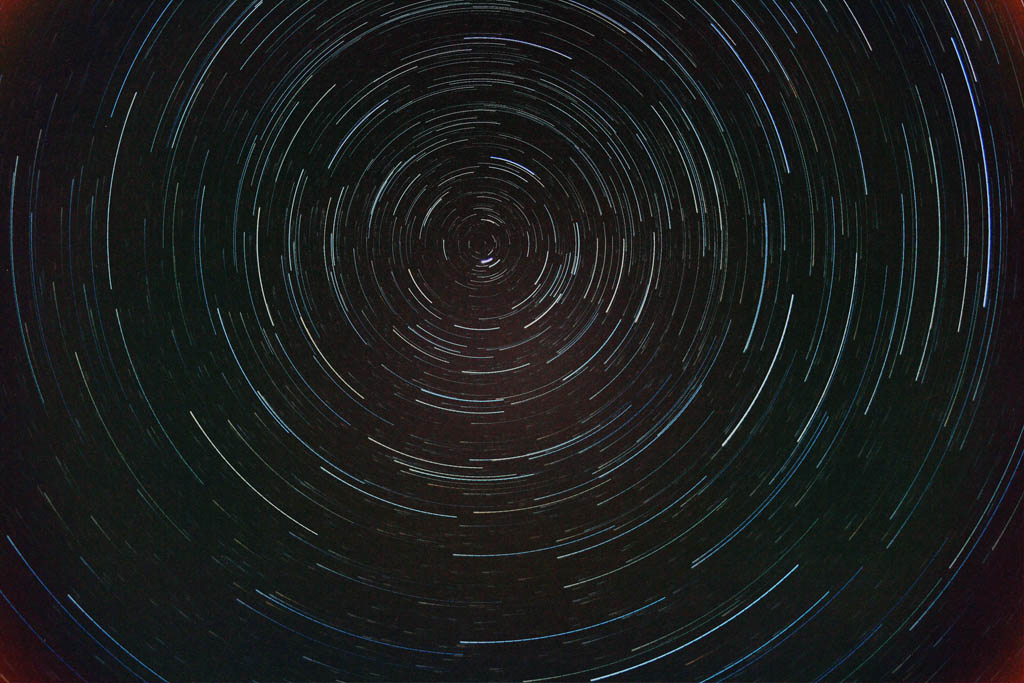
| Chris Newsome took this image of star trails around the North Celestial Pole on the 24th May 2009. He used 36 five minute exposures (with a five second break between each frame) taken with a Canon 400D, 30mm lens, and processed in StarTrails v1.1. Image Credit: Chris Newsome. |
|
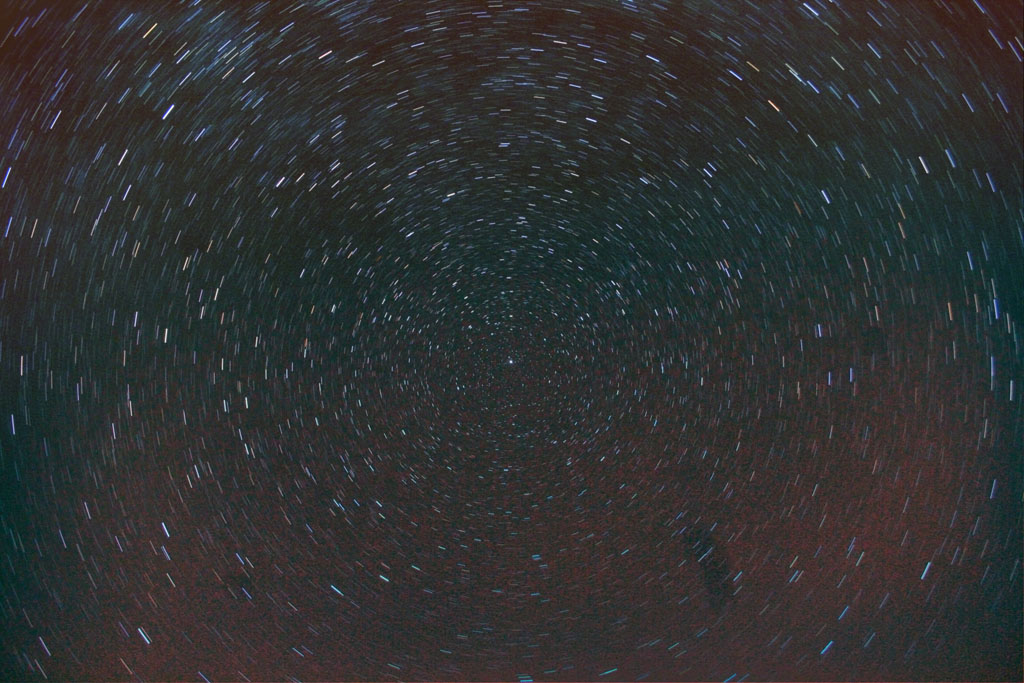
| At the DDAS observing session on Saturday 22nd November 2008 at Brailsford, Chris Newsome pointed a Canon 400D camera with 18mm lens at the Pole Star, set the exposure at 4 mins at 400ASA, to see what would be recorded! Are there really that many stars in the night sky? Image Credit: Chris Newsome. |
|
| The following picture of star trails was taken by Chris Newsome on the 25th September 2005. He used a Canon 300D camera with a 55mm lens at f/5, 100ASA, and a 40 minute exposure. The camera was pointed at Polaris (the bright star in the lower part the picture). Dark frame subtraction was made in K3CCDTools and the final image processed in Photoshop v7. Image Credit: Chris Newsome. |

|
[Top]